

On this page
- A three-question test for what can't wait
- What urgent repairs cost now versus later
- Stop the damage first, then price the fix
- The payment ladder: cheapest money first
- When a small personal loan makes sense for a repair
- Using a Probably Funding request when time is short
- Two real-world style scenarios
- Traps to avoid when you're under pressure
- Building a small repair buffer for next time
A three-question test for what can't wait
A repair can't wait if it creates a safety risk, if the damage grows every day it sits, or if it makes the home unsafe to live in for the season; everything else can usually be scheduled and saved for.
When I kept books for a handful of trades businesses, the calls that turned into the biggest invoices were rarely the dramatic ones. They were the small drips and odd smells that someone had been meaning to deal with for three months. The fix that was $400 in March became $4,000 in June because water had found its way into drywall and subfloor.
So before thinking about money, sort the problem. Ask three questions:
- Is anyone at risk? Gas smell, sparking outlets, a breaker that trips and feels hot, carbon monoxide alarms, a broken stair rail. These jump the line, full stop.
- Is it spreading? Water is the usual villain. A roof leak, a weeping pipe, a sump pump that stopped cycling. Every day adds cost.
- Can you live there this season without it? No heat in a Minnesota January or no cooling in a Phoenix July isn't comfort; it's a health issue, especially for kids, older relatives and pets.
If none of the three apply, the repair belongs on a list, not on a personal loan. A squeaky door, a cracked tile or a tired dishwasher can wait for a paycheck or two. Probably Funding sees plenty of requests for true emergencies, and the honest advice is to keep borrowing for those.
What urgent repairs cost now versus later
Most urgent small repairs cost roughly $150 to $2,500 when handled promptly, while the damage from waiting often runs two to ten times higher, which is why speed usually saves more money than any personal loan rate difference.
These are broad U.S. estimates for a typical single-family home or townhouse. Local labor rates, access and parts availability all shift them, so treat the ranges as a starting point for a quote, not a price list.
| Repair | Typical cost if fixed now | Common cost of waiting | Why it can't wait |
|---|---|---|---|
| Roof leak patch or flashing repair | $350–$1,500 | $2,000–$8,000 (ceiling, insulation, mold) | Water spreads out of sight |
| Leaking supply or drain pipe | $300–$1,200 | $1,500–$6,000 (subfloor, cabinets) | Constant moisture, rot |
| Furnace igniter or blower motor | $150–$1,500 | $500–$5,000 (frozen, burst pipes) | No heat in freezing weather |
| AC capacitor or condenser fan motor | $150–$900 | Health risk in extreme heat | Heat illness, spoiled food |
| Sump pump replacement | $600–$1,800 | $3,000–$10,000 (flooded basement) | One storm can flood it |
| Sewer line clog or backup | $250–$800 to clear | $2,000+ in cleanup | Sanitation hazard |
| Faulty breaker or scorched outlet | $200–$1,500 | Fire risk | Safety first |
| Water heater replacement | $1,200–$2,500 | Leak damage, no hot water | Tank failure rarely waits |
Look at the gap between the second and third columns. A $600 roof patch versus a $5,000 ceiling-and-insulation job is a bigger difference than the gap between a 15% and a 30% APR on any small personal loan. That doesn't mean borrow carelessly. It means the worst money decision is often doing nothing while you figure out how to pay.
If your problem is the water heater specifically, I wrote a separate walkthrough on whether to borrow for a broken water heater, with repair-or-replace checks and a payment comparison.
Stop the damage first, then price the fix
Spend the first hour limiting damage, not shopping for a personal loan: shut off water, tarp or bucket a leak, kill a circuit, and photograph everything, because those steps are nearly free and protect any insurance claim.
A few cheap moves buy you time to get two quotes instead of accepting the first truck in the driveway:
- Water: know where the main shutoff is. Turning it off stops a burst pipe from costing $100 an hour in damage.
- Roof: a $30 tarp and some weights, or even a bucket and towels inside, can hold a small leak for a few days if the weather allows.
- Electrical: switch off the breaker to the affected circuit and don't reset one that keeps tripping.
- Heat: if the furnace quits in a freeze, open cabinet doors under sinks and let faucets drip while you wait for a technician.
- Records: take dated photos and keep receipts for anything you buy. Insurers ask for both.
Once things are stable, get at least two written, itemized quotes if timing allows. For true emergencies at 2 a.m., you may only get one. That's fine; ask for it in writing and ask whether the emergency visit fee is credited toward the repair. Probably Funding's rule of thumb is never to sign an unwritten quote, and any personal loan lender will want a firm amount anyway.
The payment ladder: cheapest money first
Work down from the cheapest sources: insurance for sudden damage, the landlord if you rent, utility or local assistance programs, savings, a true 0% contractor plan, and then a fixed-rate personal loan or card, comparing total cost at each step.
Think of paying for a repair as climbing down a ladder, trying each rung before reaching for the next:
- Homeowners insurance. Policies often cover sudden, accidental damage, like a pipe that bursts or a tree limb through the roof, but not wear and tear. With a common $1,000 deductible, a $900 repair isn't worth a claim; a $6,000 water-damage job might be.
- Your landlord. If you rent, heat, plumbing and roof repairs are almost always the owner's duty. Put the request in writing.
- Assistance programs. The federal LIHEAP program, run through states, can help with heating or cooling crises for qualifying households, and many utilities and local agencies offer repair or weatherization help.
- Savings. Using an emergency fund for an emergency is exactly its purpose. Try to leave a small floor, even $300, for the next surprise.
- Contractor financing. A true 0% promotion you'll finish on time can be the cheapest borrowed money around. Deferred-interest plans can bite hard if a balance is left.
- A personal loan or credit card. Personal loans offer a fixed payment and end date; cards are flexible but cost more if paid slowly.
In the requests Probably Funding sees, most people mix two or three rungs. Paying part in cash and covering the rest with a personal loan is common and usually cheaper than financing the full bill.
When a small personal loan makes sense for a repair
A small personal loan makes sense when the repair is truly urgent, the amount sits between about $500 and $5,000, you can't cover it from savings without leaving yourself exposed, and the fixed payment fits comfortably inside your monthly budget.
Home repair personal loans in the Probably Funding network are unsecured, meaning your house isn't collateral. That's a real difference from home equity products, and it's why these personal loans suit fixes in the hundreds or low thousands rather than renovations. Many personal loans are a standard installment loan: you receive a lump sum, then repay it in equal monthly payments over 3 to 36 months.
Here's what two common repair amounts look like. These are estimates; your offered APR depends on credit, income and the lender.
- $1,200 furnace blower motor, 12 months at 15% APR: about $108 a month, about $100 in total interest.
- $2,500 roof and flashing repair, 18 months at 20% APR: about $162 a month, about $414 in interest.
- Same $2,500, 24 months at 20% APR: about $127 a month, about $554 in interest.
Six extra months lowers the payment by roughly $35 but adds about $140 in interest. Choose the shortest personal loan term whose payment you can make without strain. If speed matters more than a point of APR, fast personal loan funding is common, but compare offers first. For a closer look at what the mid-range tier involves, the $2,500 loan page breaks down typical terms, payments and who tends to use that amount.
Using a Probably Funding request when time is short
A Probably Funding request takes a few minutes, is free, and usually starts with a soft credit inquiry, so you can see whether a lender might offer a personal loan for the repair before the contractor needs payment.
We aren't a lender. We match your request with participating lenders, who decide whether to make an offer and set the rate, term and any fees. An offer is likely for many borrowers, never promised, and every lender reviews credit on its own terms.
Timing is the practical question. After you accept an offer and finish verification, many lenders send money by direct deposit within one to three business days, and some provide fast personal loan funding by the next business day. That means a Probably Funding personal loan request fits best right after you've stopped the damage and gotten a quote, not while water is still coming through the ceiling. Most contractors will schedule the work a day or two out, or take a deposit and collect the balance on completion.
Some readers find us by searching for Probably Funding loans or even Probably Fundings. Either way, the process is the same, and our home repair loans overview explains which repairs lenders in our network commonly see and which projects fall outside our $500 to $5,000 range.
Two real-world style scenarios
A modest repair usually works best with cash plus a short personal loan, while a family with no savings facing a larger fix may prefer a longer term with a lower payment, accepting more interest in exchange for breathing room.
Tom, a warehouse lead in Buffalo. His furnace blower motor dies on a February night. The technician quotes $1,200. Tom has $500 saved and a card at 26%. He puts $300 of savings toward the job, keeping $200 as a floor, and takes a $900 personal loan over 9 months. At 15% APR that's roughly $106 a month and about $57 in interest. Low stress, quick finish, and fast personal loan funding means he's heating the house again the same week.
Marisol, a dental hygienist in Tucson. Her AC condenser fan motor and a failed capacitor go in July; with a refrigerant recharge the bill hits $1,400. Days of 110-degree heat make waiting dangerous. She has almost nothing saved after a car repair last spring, so she requests a $1,500 personal loan over 18 months. At 22% APR the payment is about $99, with roughly $275 in interest. She'd prefer less interest, but a sub-$100 payment keeps her budget steady, and she plans to pay extra once her hours pick up in the fall.
Probably Funding doesn't think either choice is universally right. What they share: both stopped the damage, got a written quote, and picked a payment they could make every month without juggling.
Traps to avoid when you're under pressure
Be wary of contractors who demand full payment up front, pressure you to sign today, or push their own high-rate financing, and of any personal loan lender that asks for fees before you receive money.
- Big upfront deposits. A deposit of 10% to 33% for materials is common on larger jobs. Full payment before work starts is a red flag. Some states cap deposits; California, for example, limits most home improvement deposits to $1,000 or 10% of the contract, whichever is less.
- Storm chasers. After hail or wind, out-of-town crews knock on doors. Check licensing with your state board and ask for a local address.
- Upfront loan fees. Legitimate lenders take any origination fee out of the loan proceeds, never by gift card or wire before funding. Probably Funding never asks you for payment either.
- Over-borrowing. Size the personal loan to the quote, not the quote plus a cushion "just in case." Extra dollars carry interest the whole term.
If a repair offer or a personal loan offer feels rushed, slow it down. A reputable contractor or lender will still be there after you take an evening to compare.
Building a small repair buffer for next time
Setting aside about 1% of your home's value per year for maintenance is the classic rule, but even $25 to $50 a month into a separate repair fund turns the next emergency into an inconvenience instead of a debt.
A home that's worth $250,000 might need around $2,500 a year in upkeep under the 1% rule. That number scares people, so start smaller: $40 a month is $480 a year, enough to cover most of the "fix it now" column in the table above on its own.
Keep the fund in a separate savings account with a boring name like "house." Once any personal loan is paid off, redirect that same monthly payment into the fund; you're already used to living without it. Within a year or two you'll have a cushion that makes the next leak an annoyance rather than a crisis, and that's the outcome Probably Funding would rather see for every reader.
Related posts
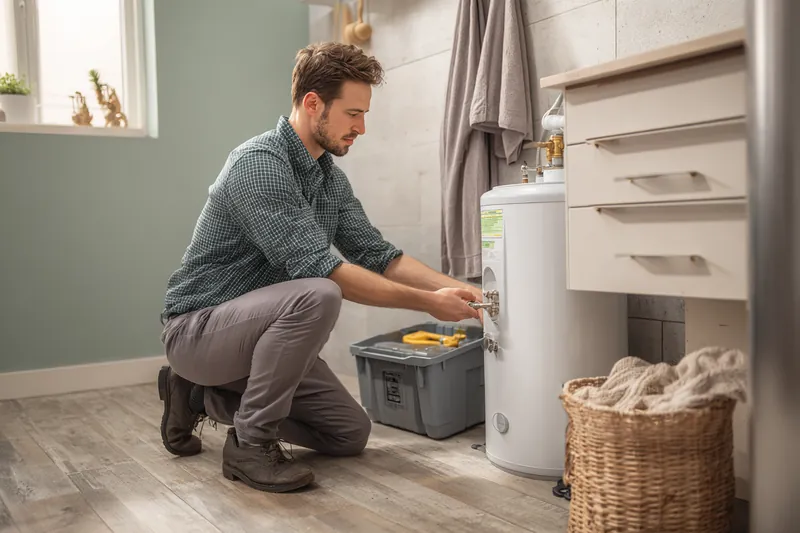
Should I Borrow to Replace a Broken Water Heater?
A dead water heater usually costs $1,200 to $2,500 to replace. Here's how to tell when a small loan is the right call and when it isn't.
Read the guide →
Budgeting for Pet Surgery: A Practical Plan
A planned surgery gives you time. Here is how to use a few weeks to shrink what you borrow and keep recovery costs from surprising you.
Read the guide →