
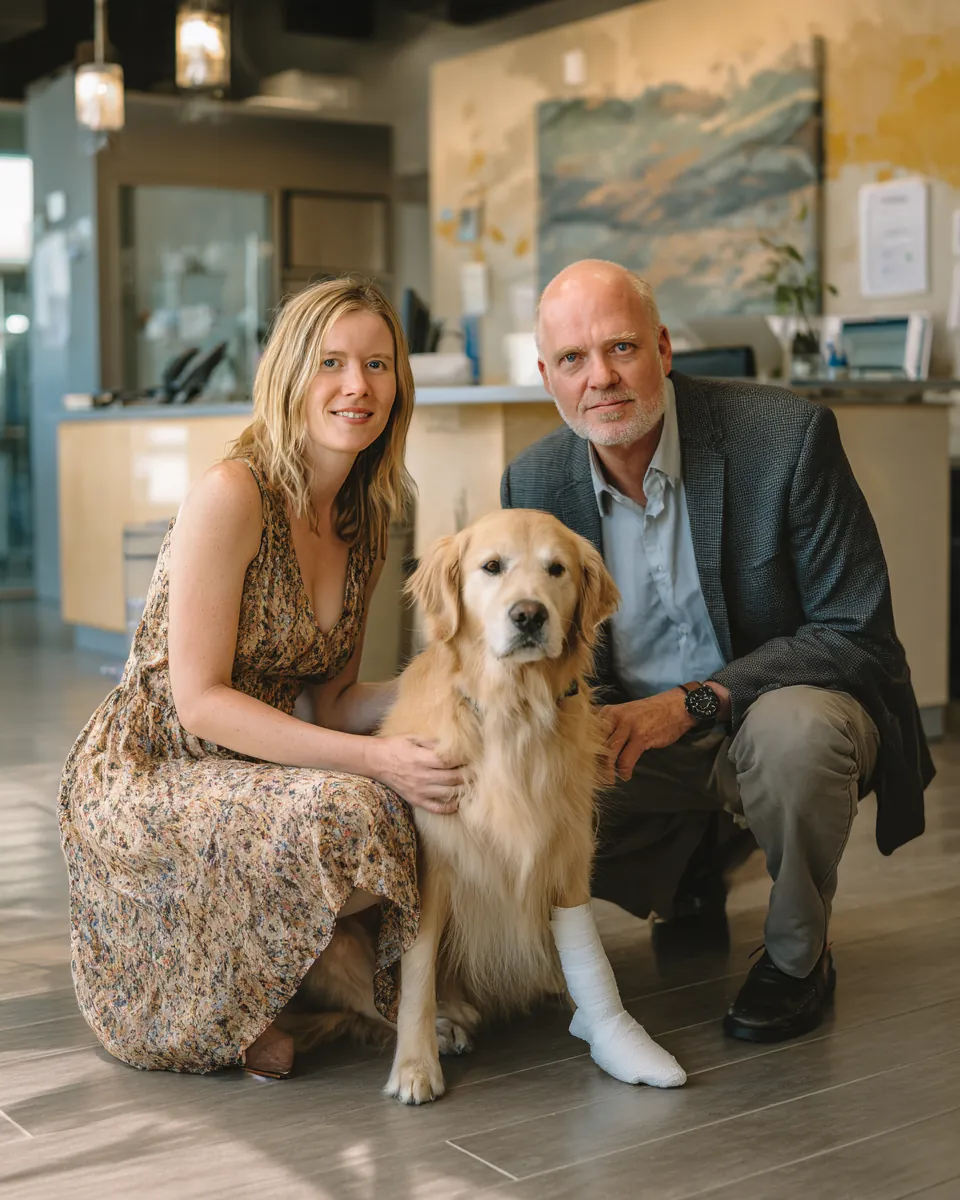
Fits an after-hours emergency visit with X-rays, bloodwork, IV fluids, and an overnight stay for a dog that swallowed something questionable but did not need surgery. Twelve months keeps payments manageable.
Covers a senior cat's dental procedure with anesthesia, dental X-rays, and several extractions, plus pain medication and a recheck. An 18-month term spreads it into a steady, predictable monthly payment.
A personal loan this size can pay for foreign-body surgery when a dog swallows a sock or toy, including hospitalization and follow-up care. A 24-month term lowers the payment but adds interest, so choose carefully.
On this page
- What a Probably Funding pet care loan is
- What common vet procedures typically cost
- Ask the clinic for an itemized estimate first
- Pet insurance vs a personal loan vs a clinic payment plan
- What to do when surgery cannot wait
- What a Probably Funding personal loan for vet bills might cost
- Who qualifies for a Probably Funding pet care loan
- Caring for your pet and your budget at the same time
What a Probably Funding pet care loan is
A pet care loan is a regular unsecured personal loan used for veterinary costs. You receive a lump sum, pay the clinic, and repay the lender in equal monthly payments over a set term.
There is no special product hiding behind the name. Lenders in the Probably Funding network do not lend to your vet, and your vet does not have to sign up for anything. The lender deposits money into your checking account, and you pay the bill the same way you would pay any other large expense.
That simplicity is why Probably Funding likes this approach when an animal you love is in trouble. You are not limited to clinics that accept a particular financing card. You can move between an emergency hospital and a specialist without reapplying. And a fixed-rate personal loan tells you, on day one, exactly what each month will cost and when the last payment is due.
Probably Funding itself is a free matching service, not a lender. Probably Funding passes your request to participating lenders whose personal loans range from $500 to $5,000, and those lenders make every decision on credit, rate, and term. An offer is likely for many people, but never promised.
What common vet procedures typically cost
Many unplanned vet bills land between $500 and $5,000. The figures below are typical ranges that vary widely by region, clinic, species, size, and complications, so treat them as rough starting points only.
| Procedure | Typical range (varies) | What drives the cost |
|---|---|---|
| Emergency visit with diagnostics | $500–$1,500 | After-hours exam fee, X-rays, bloodwork, IV fluids, overnight monitoring |
| Foreign-body surgery (swallowed object) | $2,000–$5,000 | Location of the blockage, whether intestine must be removed, days in hospital |
| Dental cleaning with extractions | $600–$3,000 | Number and type of teeth pulled, dental X-rays, anesthesia time, age |
| Cruciate ligament repair (dog knee) | $1,500–$6,000 | Technique used, dog's weight, specialist vs general practice, rehab |
Cruciate repair deserves a note. Smaller dogs often qualify for a less invasive technique toward the lower end, while larger dogs frequently need a bone-cutting procedure done by a surgical specialist, which can push past $5,000. In that case a personal loan might cover most of the bill, with savings or a clinic plan covering the rest.
Consider Maya, a teacher in Sacramento, whose Labrador tore a ligament chasing a ball. The specialist's estimate came to $4,600 including X-rays, surgery, and two rechecks. She requested $4,000 through Probably Funding and paid the difference from savings.
Ask the clinic for an itemized estimate first
Before you borrow a dollar through Probably Funding, ask for a written, itemized estimate with a low and high range. It shows exactly what you are paying for and tells you how much to request.
Most clinics provide estimates as a matter of routine, but in a stressful moment it is easy to nod along to a verbal number. A written one lets you:
- See line items such as anesthesia, surgery time, medications, hospitalization per night, and rechecks.
- Ask about options. Some diagnostics can wait; some medications have generic versions; some rechecks can happen at your regular vet.
- Plan for the high end. Complications happen. If the estimate says $2,200 to $3,100, borrowing near the top of that range avoids a second personal loan request later.
- Match the loan to the bill. Taking a $3,000 personal loan when you need $1,800 only adds interest.
Probably Funding suggests asking, too, whether the clinic takes a deposit now and the balance at discharge. That timing matters when a personal loan takes a day or two to fund.

Pet insurance vs a personal loan vs a clinic payment plan
Pet insurance helps only if you bought it before the problem started. For an emergency today, the practical choice is usually between a clinic payment plan, a medical credit card, or a fixed-rate personal loan.
| Option | Best for | Watch out for |
|---|---|---|
| Pet insurance | Future accidents and illnesses after the waiting period | Excludes pre-existing conditions; you usually pay first and get reimbursed later |
| Clinic payment plan | Smaller balances at a clinic that offers in-house terms | Not every clinic offers one; often short terms and a large upfront deposit |
| Medical or vet credit card | Balances you can clear inside a promotional window | Deferred interest can hit the full original balance if you miss the deadline |
| Personal loan | Larger bills needing a fixed payment and a clear end date | Interest from the first month; APR depends on your credit profile |
Probably Funding encourages a second look at insurance even while you finance today's bill. Many policies reimburse a large share of covered costs, so once your pet recovers, pricing a plan could keep the next emergency off a personal loan entirely. Just remember that anything already diagnosed will likely be excluded.
For the promotional cards, do the math honestly. If you cannot clear the full balance before the promo ends, deferred interest can land all at once. A Probably Funding personal loan charges interest from the start but never springs a retroactive charge. For a walk-through of emergency-specific choices, read whether you can finance an emergency vet bill and how.
What to do when surgery cannot wait
Submit your request right away, ask the clinic to accept a deposit, and time the signature so funds arrive before discharge. Offers often appear within minutes, and fast personal loan funding usually follows within one to two business days.
Speed is where people feel the most pressure. The Probably Funding apply online form takes about five to ten minutes, and you can finish it on your phone in the waiting room. Here is a realistic sequence:
- Get the estimate and decide on a personal loan amount near its high end.
- Submit one request through Probably Funding while your pet is being stabilized.
- Review offers, often shown after a soft credit inquiry that does not affect your score.
- Sign early on a business day. Fast personal loan funding depends on bank cutoffs; a morning signature usually beats an evening one.
- Tell the clinic the expected deposit date and ask to settle the balance then.
Andre, a delivery driver in Atlanta, brought his cat in on a Saturday night with a urinary blockage. He paid a $400 deposit by debit, requested $1,500 through Probably Funding on Sunday, signed Monday morning, and paid the remaining balance Tuesday when the personal loan funds landed. The $1,500 loan cost breakdown shows what that size typically costs across terms.
What a Probably Funding personal loan for vet bills might cost
A $2,500 vet bill financed with a personal loan over 18 months at 19.99% APR works out to roughly $162 a month and about $414 in total interest. That is an estimate; your offer sets the actual numbers.
A few more estimates, rounded, using standard amortization:
- $1,500 over 12 months at 24.99% APR: about $143 a month, about $211 in interest.
- $2,000 over 12 months at 23% APR: about $188 a month, about $258 in interest.
- $3,500 over 24 months at 19.99% APR: about $178 a month, about $775 in interest.
Rates in the representative range run from 5.99% to 35.99% APR and vary by lender and credit profile. The Probably Funding rate ranges and APR explainer shows how origination fees factor in. For a bigger surgery, the $4,000 loan payment scenarios compare 12, 24, and 36 months side by side.
Across the offers Probably Funding users see, shorter terms cost less overall. If you can handle a slightly higher payment, 12 or 18 months usually beats 36, and many personal loan lenders let you pay early without a penalty if a tax refund or bonus arrives.
Who qualifies for a Probably Funding pet care loan
Personal loan lenders commonly look for applicants who are 18 or older, live in the U.S., have verifiable income, and hold an active checking account. Credit history and your debt-to-income ratio shape the rate you are offered.
You do not need perfect credit to see offers through Probably Funding, though stronger profiles see lower APRs. Lenders review your reports from Equifax, Experian, or TransUnion and weigh your existing monthly debts against your income. Steady paychecks, whether W-2 or documented gig work, help. Check the full list of common eligibility requirements before you start so nothing surprises you mid-request.
If no lender makes an offer, you owe Probably Funding nothing. Ask your clinic about a partial payment plan and revisit a personal loan after paying down a card balance or two.
Caring for your pet and your budget at the same time
Borrow what the treatment actually needs, pick the shortest term you can comfortably afford, and set up a small monthly pet fund once the crisis passes so the next bill is smaller.
Nobody wants to put a price on a pet's recovery, and you should not feel guilty for asking about costs. Good vets expect the question and often have options you would not hear about otherwise. A calm conversation about the estimate is part of good care, not a lapse in it.
Once your pet is home and healing, a few habits help:
- Put the personal loan on autopay for the day after your paycheck lands.
- Start a pet fund with even $25 to $50 a month.
- Price a pet insurance policy while your animal is healthy.
- Keep every receipt and discharge note in one folder for future vets.
Whether you searched for Probably Funding or Probably Fundings, you reach the same free service; roughly 33,000 customers have used it, and 990 ratings put its average at 4.8 stars. Want to talk it through first? Write to quickrequest@probablyfundings.com or phone 888-512-0754. Because lenders set pricing, Probably Funding cannot quote rates, but we can explain each step while you look after the one who matters most right now.
Questions about pet care loans
Will my vet accept money from a personal loan?
Yes. The lender deposits the funds into your checking account, so to the clinic it looks like any other payment by debit card, check, or bank transfer. The vet never deals with the lender. That also means you can split the money between the surgery, follow-up rechecks, and prescription food without asking anyone's permission, as long as the loan agreement allows personal and household uses.
Can I get a loan for a pet that is already in surgery?
You can submit a request at any point, including from the waiting room, and many lenders show offers within minutes. Funding, though, usually takes one to two business days after you sign. If the clinic needs payment before discharge, ask whether they will hold the balance for a couple of days with a partial deposit while your Probably Funding personal loan finalizes. Many will, especially if you show them the pending offer.
Does a pet care loan cover routine care like vaccines?
Technically the money can go toward any vet expense, but using a personal loan for routine care is rarely a good trade. Annual vaccines, flea prevention, and checkups are predictable, so a monthly savings transfer or a wellness plan offered by your clinic usually costs less than interest. Save borrowing for large, lumpy bills like surgery, emergency hospitalization, or dental extractions that arrive all at once.
Can I borrow for a horse or other large animal?
Many lenders place no restriction on the type of animal, since what people call Probably Funding loans are really general personal loans from participating lenders rather than a product tied to a clinic. Colic surgery or a large-animal emergency can easily cost more than $5,000, though, so check the full estimate first. If the bill runs past that range, a loan could cover part of it while an equine insurance claim or a clinic plan handles the rest.